
Vendors and accounts
The vendorsyour data actually reaches.
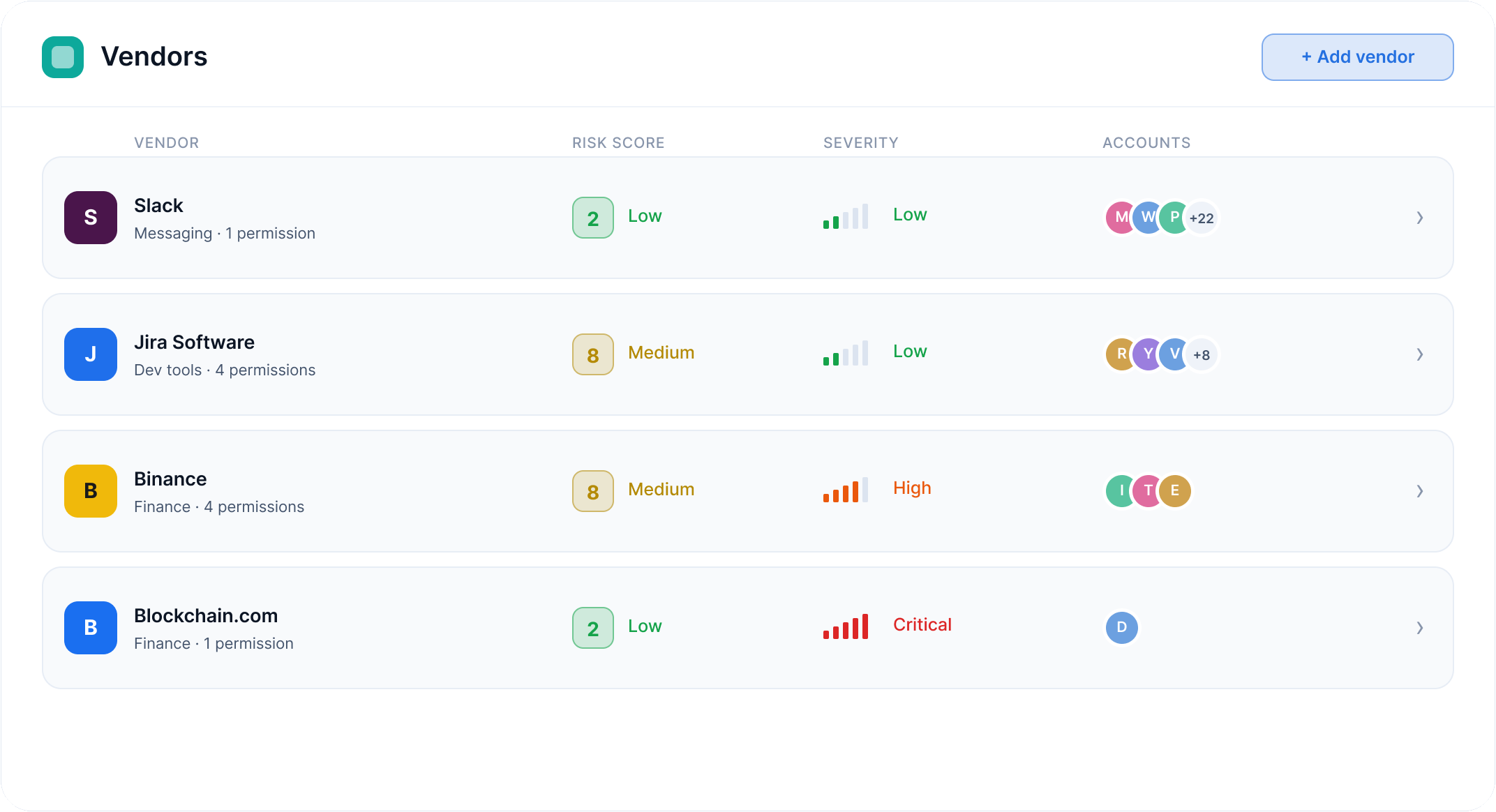
Connect Google Workspace or Microsoft 365 and Skenify reads the third parties your people already granted access to, with the permissions they hold and the accounts behind them. Discovered from real grants, not declared on a questionnaire.
Permissions, not logos.
Each vendor is scored 1 to 10 by the privilege it holds: read all mail, read directory data, read audit logs. The permission is the evidence behind the score, and a one-sentence reason says why.
Who holds access,per person.
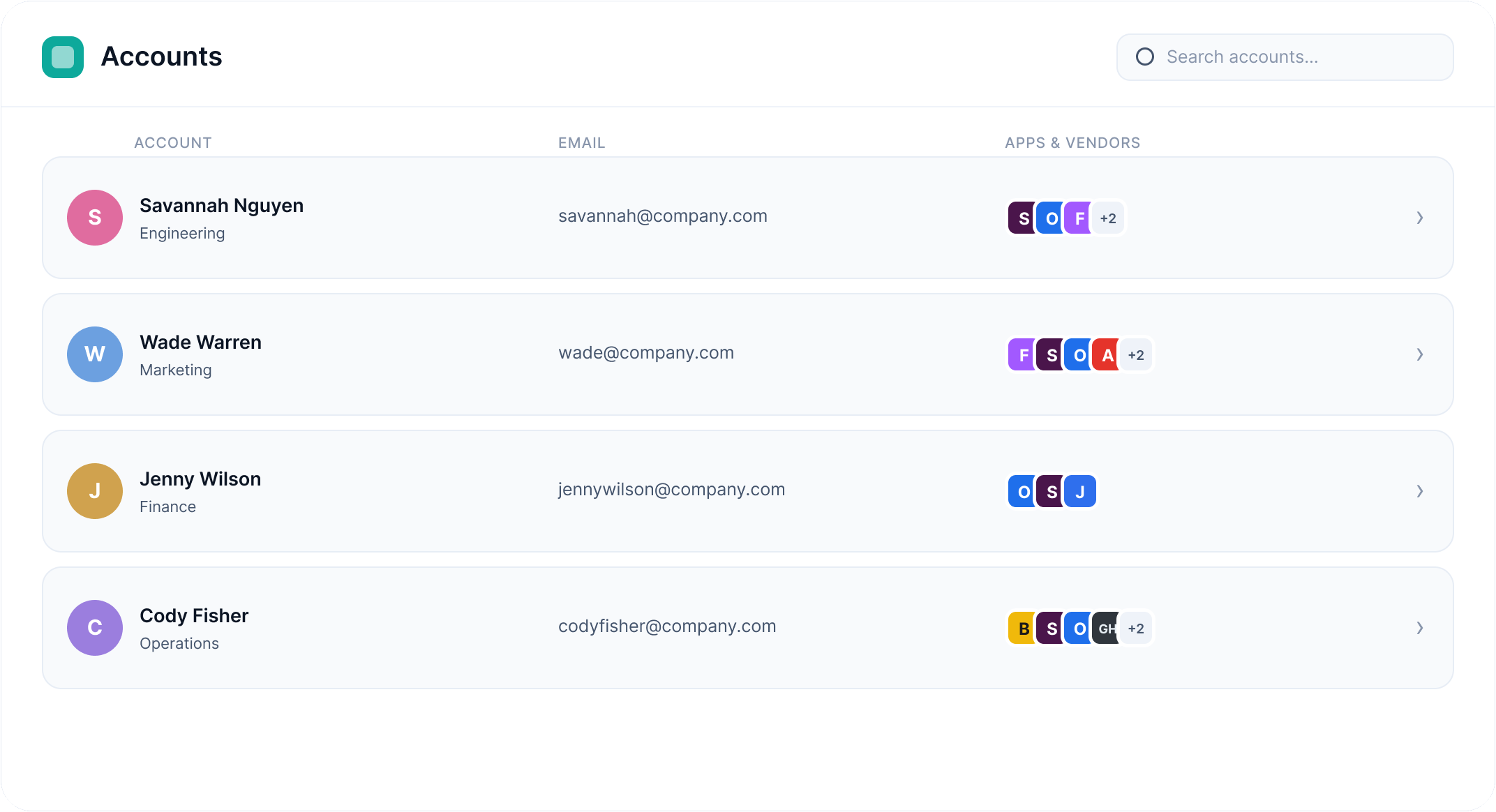
Every account in the tenant, with the apps that person authorised. Breached credentials are flagged with their source and whether the account is still active, so a leaver's old password does not stay a risk nobody can see.
Accounts mapped to the apps each person connected.
Breached and leaked credentials flagged with their source.
Whether a breached account is still active in your tenant.
What vendor discovery gives you
Vendors from real OAuth grants
Read from the tenant the moment a grant exists, including the tools a team signed up for without telling anyone.
Reach
One person or the whole tenant, including future employees.
Permission inventory
Every permission with a plain-language description, its own risk, scope and category, and the date it was first seen.
Breach exposure per account
Known breaches tied to the people in your tenant, next to the apps they use.
Evidence for NIS2 and DORA
Supply chain and third-party register requirements need a maintained list of vendors and their access. This produces that list as a byproduct of running.
See your own numbersthis week.
Seven days, no card. We approve requests within 24 hours and findings land about fifteen minutes after you connect.