
Risk register and tasks
From a finding to a fixwith an owner.
Confirmed findings become scored risks in a register that maintains itself, and every risk becomes tasks with an owner and a deadline. Your team works the board, the board resolves the risk, and the score records that it happened.
A registera board can read.
Risks are written as business scenarios, scored on likelihood and impact before and after treatment, and carry a strategy, an owner, a status and the ISO 27001 controls they touch.
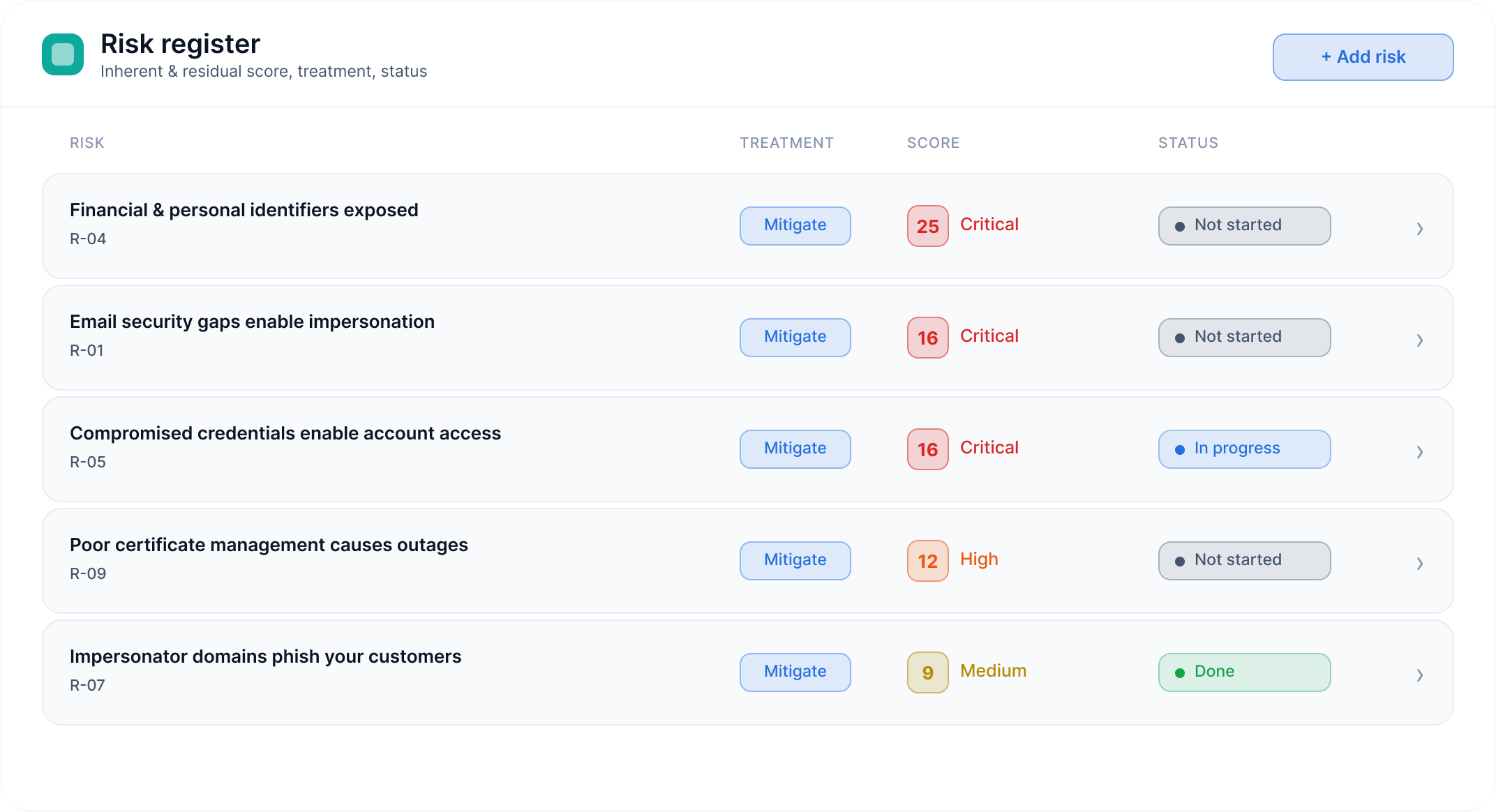
Exposed admin interface
Likelihood: High, Impact: Severe, Owner: CTO
A boardthat writes itself.
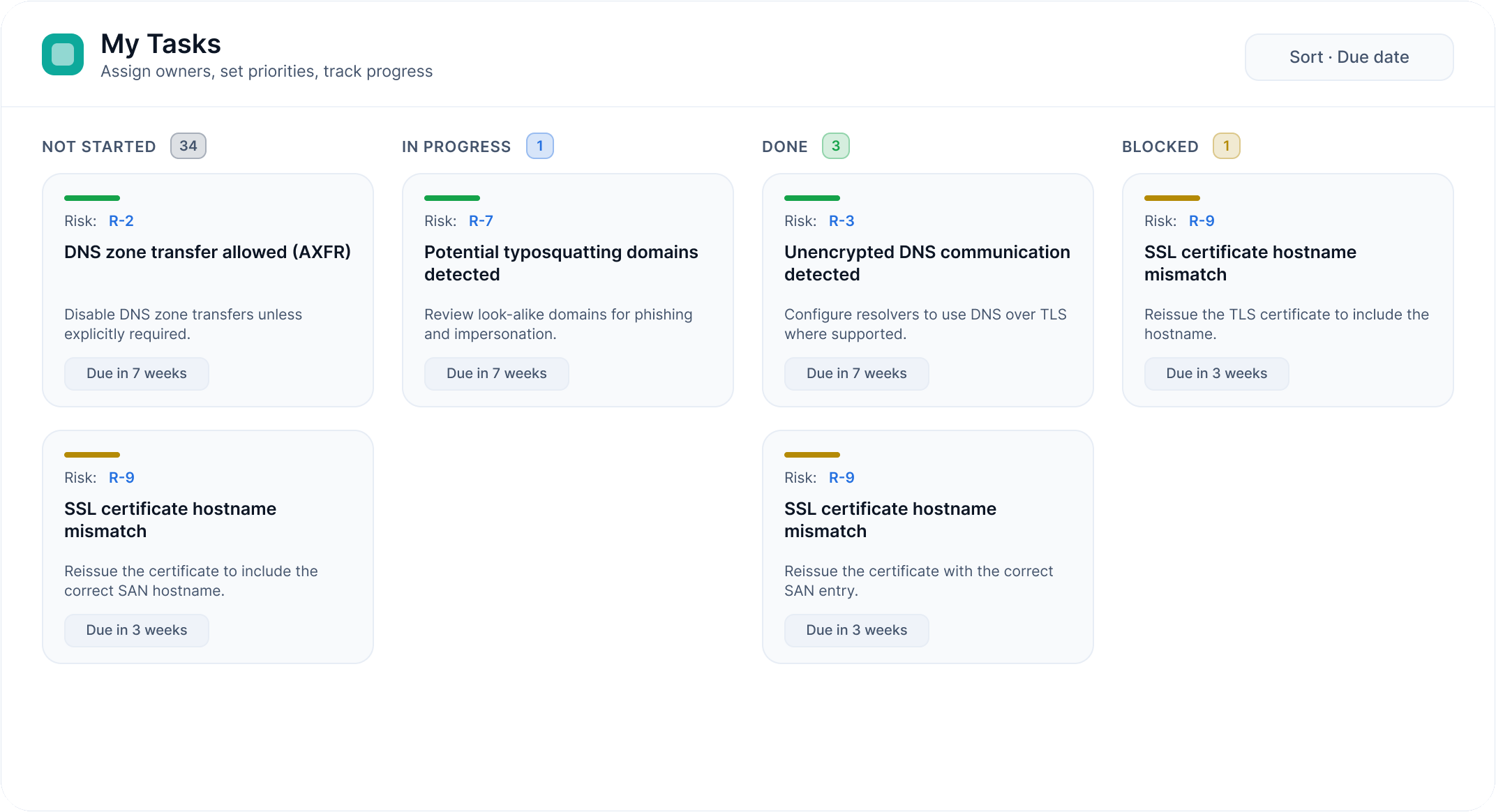
One task per finding with the exact change to make, a due date from the SLA and a priority. Four columns, owners from your team, and a score that climbs as tasks close.
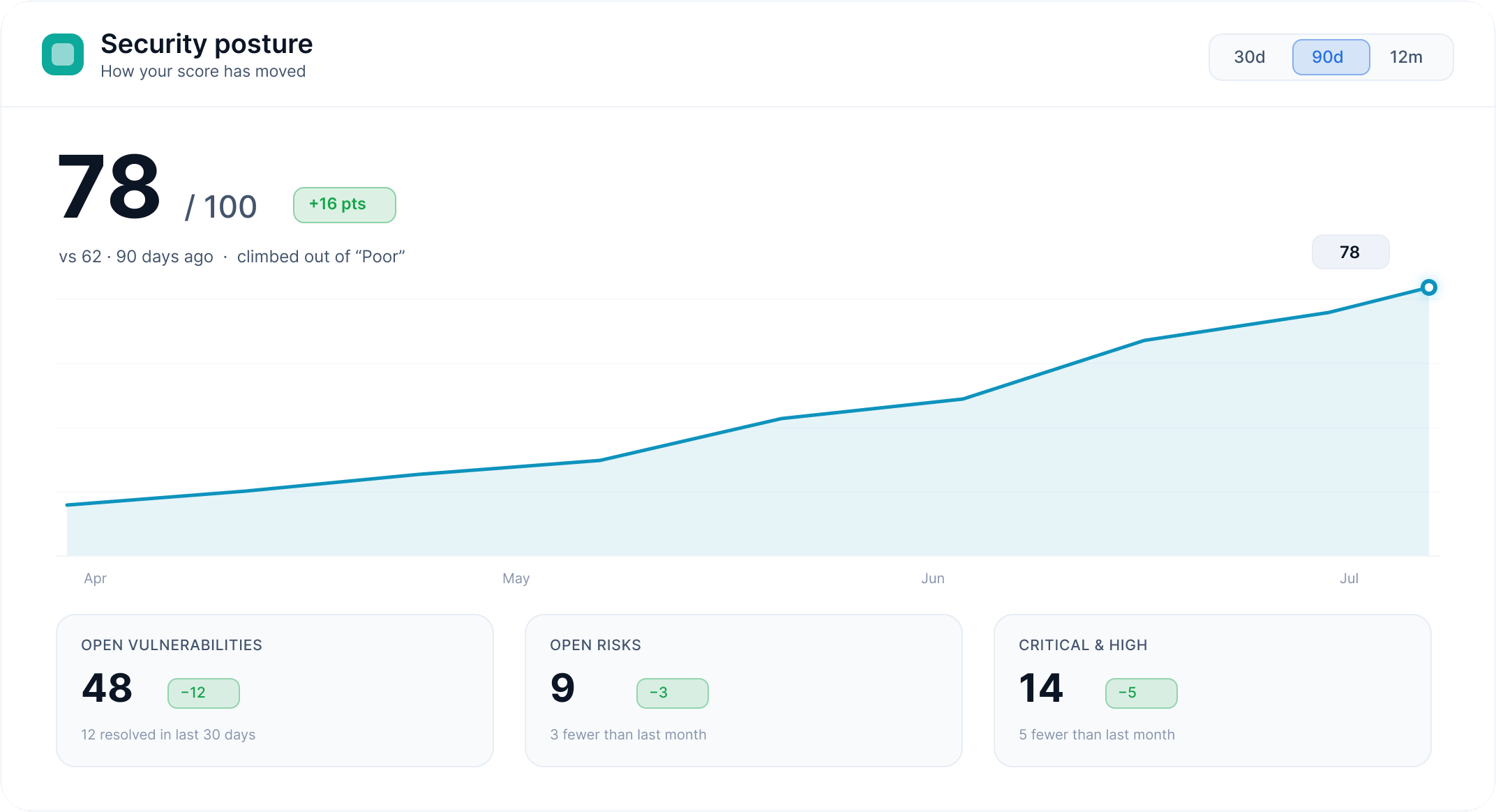
The score that moves.
Security posture over 30 days, 90 days or 12 months, with the category that moved it, mean time to remediate, findings past SLA and the age of the open backlog.
How risk becomes workthat gets done
One register, every source
Findings, vendor exposure, breached accounts and your own scenarios in one register instead of four lists.
Scored by likelihood and impact
Inherent and residual scores on a 5 by 5 matrix, so the order reflects business damage rather than raw CVSS.
Treatment recorded to done
Mitigate, accept, avoid or transfer. The decision is dated and visible, which is what an auditor asks for.
Tasks written from each finding
The record to publish, the header to set, the policy to change.
The chain reaction
Close a task, the risk drops, the finding closes, the score moves. One motion, tracked end to end.
SLA targets
Critical 7 days, high 30, medium 90, low 180, with the count of findings past SLA.
See your own numbersthis week.
Seven days, no card. We approve requests within 24 hours and findings land about fifteen minutes after you connect.